A Word About Jameed
Jameed is the ingredient that makes mansaf what it is. Without it, the dish simply does not exist. It is a hard, dried, fermented yogurt made from goat or sheep milk, traditionally formed into dense balls and left to dry and age. The result is a deeply savory, intensely tangy ingredient with a flavor unlike any other dairy product in the world.
Its origins are practical: in the absence of refrigeration, Bedouin communities preserved milk by fermenting and drying it into jameed, which could then last for months or even years. When reconstituted in water and cooked into a sauce, it becomes the soul of mansaf: smooth, golden, and unmistakably itself.
Look for dried jameed balls or liquid jameed at your local Middle Eastern or Mediterranean grocery store. If using liquid jameed, follow the package instructions to prepare the sauce.
The Story
Mansaf is not simply a dish. It is a declaration of welcome, a marker of celebration, and one of the most culturally significant foods in the Arab world. The national dish of Jordan, it is also deeply rooted in Palestinian identity, with ancestral origins tracing back to jameed-making traditions in Jaffa before they spread across the region.
Legend has it that during the reign of King Mesha of Moab, founder of the Jordanian city of Karak in 147 B.C., he declared: “Whoever didn’t eat mansaf would be considered an enemy.”
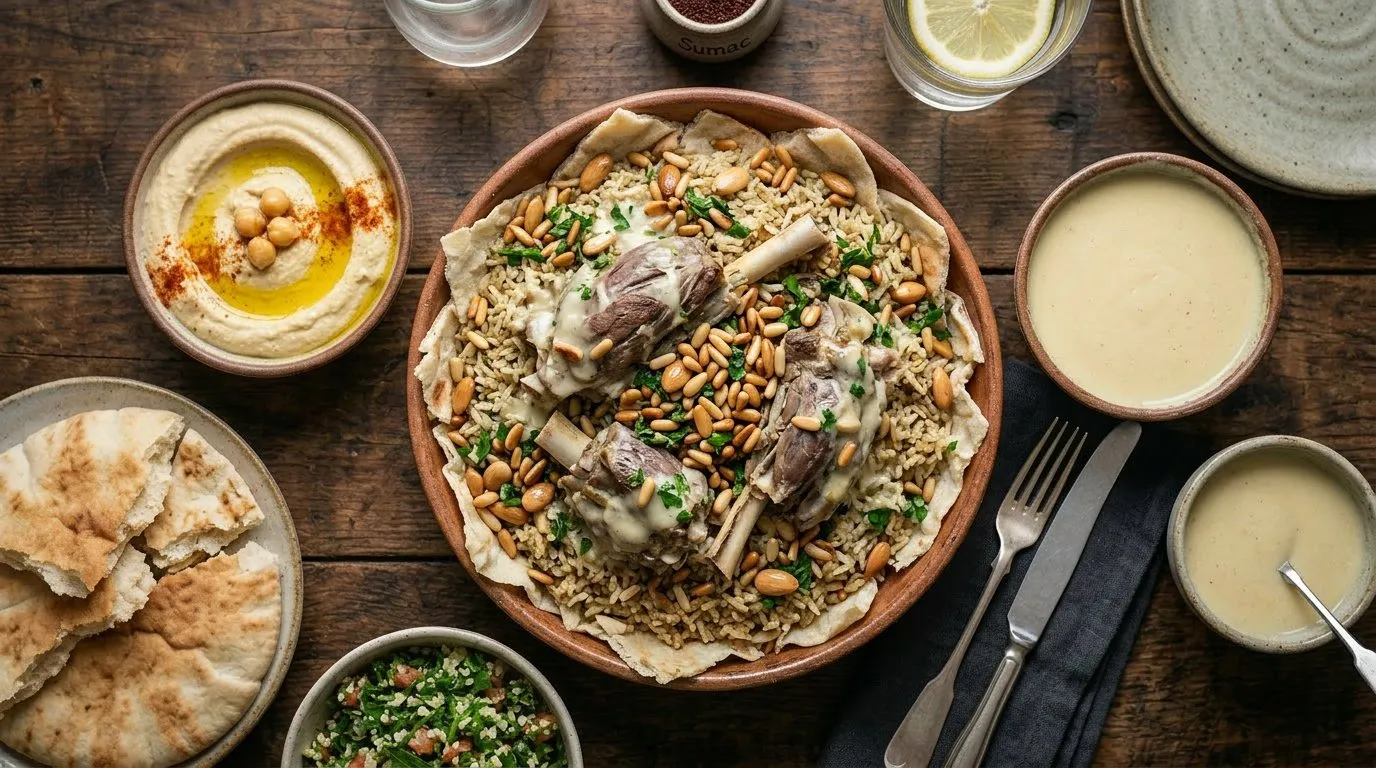
The word mansaf itself comes from the verb nasafa, referring to the act of spreading or arranging food on a large tray. It is a dish designed for communal eating: a wide platter piled high with shrak bread, rice, and slow-cooked lamb, bathed in jameed sauce and scattered with toasted nuts and parsley.
Today it is served at weddings, holidays, homecomings, and any occasion worthy of the highest expression of generosity. It has been recognized on the UNESCO World Heritage list, a testament not just to its flavor, but to what it represents: the art of feeding people well, and the culture that built it.
A note before you begin: if you have never tasted mansaf, it is worth seeking it out at a local Middle Eastern restaurant first. The flavor of jameed is unlike anything else: deeply tangy, complex, and savory in a way that takes some getting used to. Once you know it, you will recognize it instantly. Preparing mansaf takes a few hours and rewards the effort with something genuinely extraordinary.

Traditionally, especially in Jordan and Palestine, mansaf is eaten with the right hand directly from the communal tray, each person keeping to their own section. Most people today use individual plates and spoons, and both are perfectly fine. But there is something about eating this dish with your hands, standing around a shared tray with family, that no plate can quite replicate.
How to Make It
Soak the jameed overnight
The night before, break up the dried jameed ball and submerge the pieces in cold water. Let it soak overnight so it softens enough to blend into a smooth sauce. If you are using liquid jameed, follow the instructions on the package and skip this step.
Cook the lamb
Rinse the lamb pieces, then place them in a large, deep pot. Cover with water by 2 to 3 inches and bring to a boil. As the water heats, a white foam will rise to the surface; skim it off and discard until the broth runs clear. Add the quartered onion, cardamom pods, bay leaves, and black pepper. Reduce the heat to a low simmer and cook for approximately 2 hours, until the meat is tender and falling off the bone. Reserve the broth for both the sauce and the rice.
Make the jameed sauce
Blend the soaked jameed until fully dissolved. Add the reserved lamb broth to reach your desired consistency: more broth for a thinner sauce, less for a thicker one. Stir in the plain whole milk yogurt and cornstarch. Pass the liquid through a fine sieve to remove any lumps. Bring the sauce to a gentle boil in a pot, then add the cooked lamb pieces and reduce the heat. Simmer for about 15 minutes, until smooth, tangy, and thick enough to coat the back of a ladle.
Cook the rice
Heat the olive oil or ghee in a pot and toast the washed rice for a couple of minutes, stirring, until the grains are lightly coated. Add 5 to 6 cups of the reserved lamb broth in place of water, checking your rice package for the exact ratio. Season with salt and a pinch of turmeric for color. Bring to a boil, then reduce to a low simmer and cook until the rice is fully done. Watch it closely; cooking times vary by rice variety.
Toast the almonds
In a dry pan over medium heat, toast the slivered almonds until golden and fragrant. Set aside for garnishing at the very end.
Build the platter
Lay a full sheet of shrak or markook bread across the bottom of the tray so it covers the base completely. Ladle just enough jameed sauce over the bread to moisten it evenly, then pile the cooked turmeric rice on top in a generous mound.
Finish and serve
Remove the lamb pieces from the sauce and arrange them over the rice. Scatter toasted slivered almonds and chopped parsley over everything. Serve the remaining jameed sauce in bowls on the side so each person can add as much as they like.