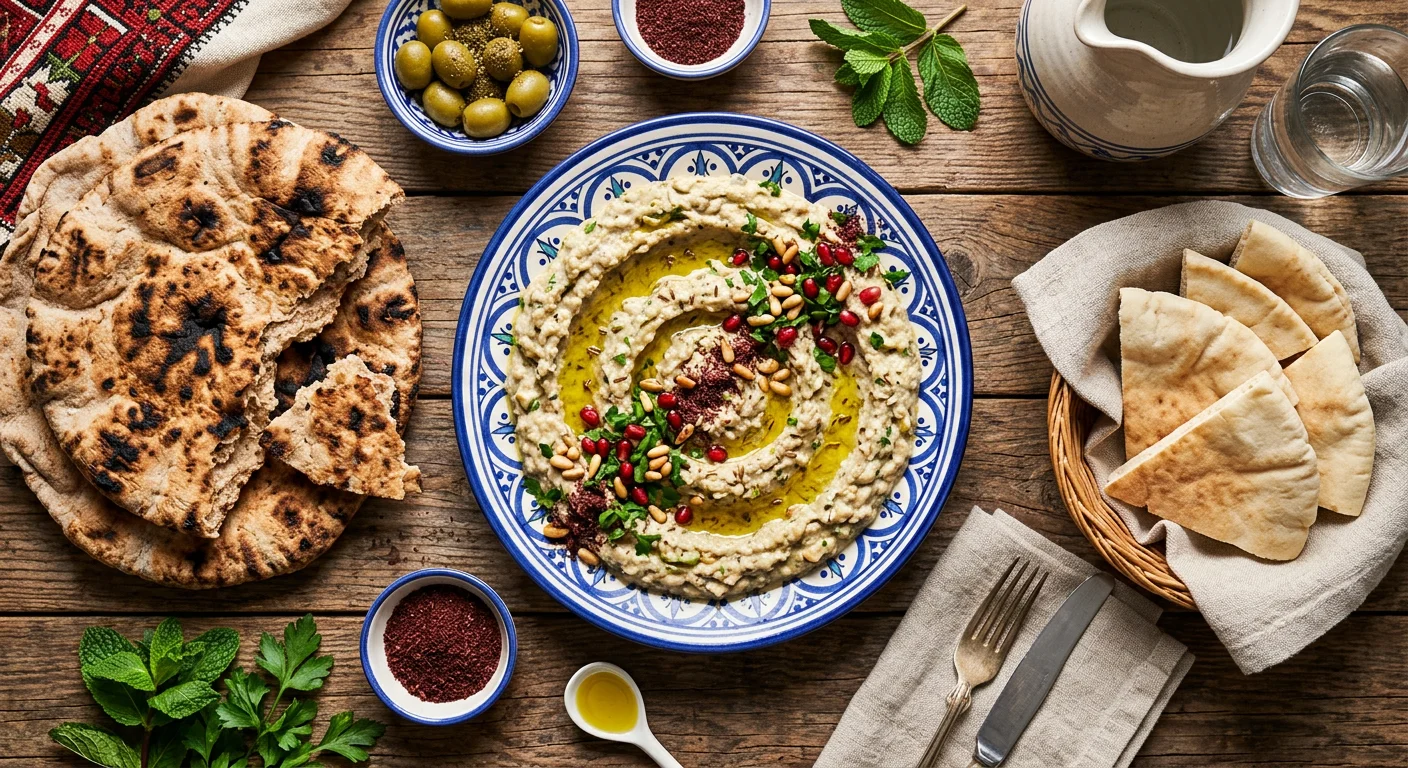
Everything Depends on the Roast
Baba Ghannouj lives or dies by how well the eggplant is roasted. The goal is complete collapse — skin blackened and wrinkled, flesh so soft it offers no resistance. That char is not incidental; the faint smokiness it leaves behind is what separates this dish from a simple eggplant purée.
The best results come from roasting directly over an open flame — a gas burner or live fire — turning the eggplant until every side is scorched. An oven set to its highest temperature works too, though it produces less smoke. Either way, do not rush it: an undercooked eggplant will taste flat no matter how good your tahini is.
💡 On seeds: After peeling, split the eggplant and scrape out as many seeds as you can. They are bitter and watery, and removing them gives the final dish a cleaner, silkier texture.
What Makes It Palestinian
- 🍅 Fresh tomato — stirred into the mash, not just used as garnish. It brightens the dish and adds a light acidity distinct from Lebanese versions.
- 🥛 A touch of yogurt — adds creaminess and a gentle tang that softens the rawness of the garlic.
- 🌿 Fresh parsley — used generously, both stirred in and scattered on top, giving the dish color and a clean herbal finish.
- 🫒 Good olive oil — the final drizzle is not decorative. Use the best you have; it becomes part of the flavor.
The Story
A gentle folk tale, told across the Levant, offers one origin for this dish’s name. A well-loved priest — called Baba Ghannouj, “the tender father” — was brought a humble meal of roasted eggplant by one of his disciples. Rather than eat alone, he invited those nearby to join him. The gathering was so taken with both the food and the spirit in which it was offered that they gave the dish his name: baba, meaning father or revered elder, and ghannouj, evoking something soft, indulgent, and carefully tended — much like eggplant itself, once it has been coaxed into submission over flame.
Baba Ghannouj has never been food for one. It belongs to the mezze table, to shared platters and torn bread, to the kind of meal that assumes others will be present.
Whether or not the story is true, it captures something real about the dish. In Palestinian tradition, it is often brightened with pomegranate molasses, chopped vegetables, and fresh herbs, and served alongside warm taboon — each household inflecting it differently, while the essential gesture remains the same.
The dish traveled far, taking on local character without losing its core. A Lebanese tradition calls it “monk’s salad,” a name that echoes the spirit of the folk tale: something humble made generous by the act of sharing.
How to Serve It
In many Palestinian homes, the eggplants come from the garden. Few vegetables are as reliably abundant, and that abundance carries its own kind of pride — there is something satisfying about bringing a dish this good to the table from something you grew yourself. Serve Baba Ghannouj at the center of a mezze spread alongside hummus, tabbouleh, and warm bread, or as a simple starter with nothing but a generous basket of taboon and good olive oil. It is best eaten the day it is made, while the smokiness is still present. Leftovers keep in the refrigerator for up to two days — bring them to room temperature before serving and refresh with a fresh drizzle of oil.
How to Make It
Roast the eggplants
Roast the eggplants until they are thoroughly cooked. You will know they are ready when the skin is deeply wrinkled and often charred or collapsed in places. Do not worry if they look almost burnt — that is exactly what you want. More importantly, the eggplant should feel completely soft when pressed. Set them aside to cool before handling.
Peel and deseed
Peel the eggplants without removing the stems and discard the charred skins. Split them open and remove as many seeds as possible — this step makes a real difference to the texture and keeps the dish from turning watery.
Mash the eggplant
Place the eggplants in a mixing bowl and mash them thoroughly with a fork until smooth but with some texture remaining. Once mashed, remove and discard the stems.
Mix in the remaining ingredients
Add the diced tomato, crushed garlic, tahini, yogurt, salt, and lemon juice. Mix well until all the ingredients are fully incorporated into the eggplant. Taste and adjust the lemon or salt as needed.
Garnish and serve
Transfer the Baba Ghannouj to a wide, shallow serving dish. Scatter the chopped parsley over the top and finish with a generous drizzle of olive oil. Serve immediately alongside warm taboon or pita bread.