The Art of the Mezze Table
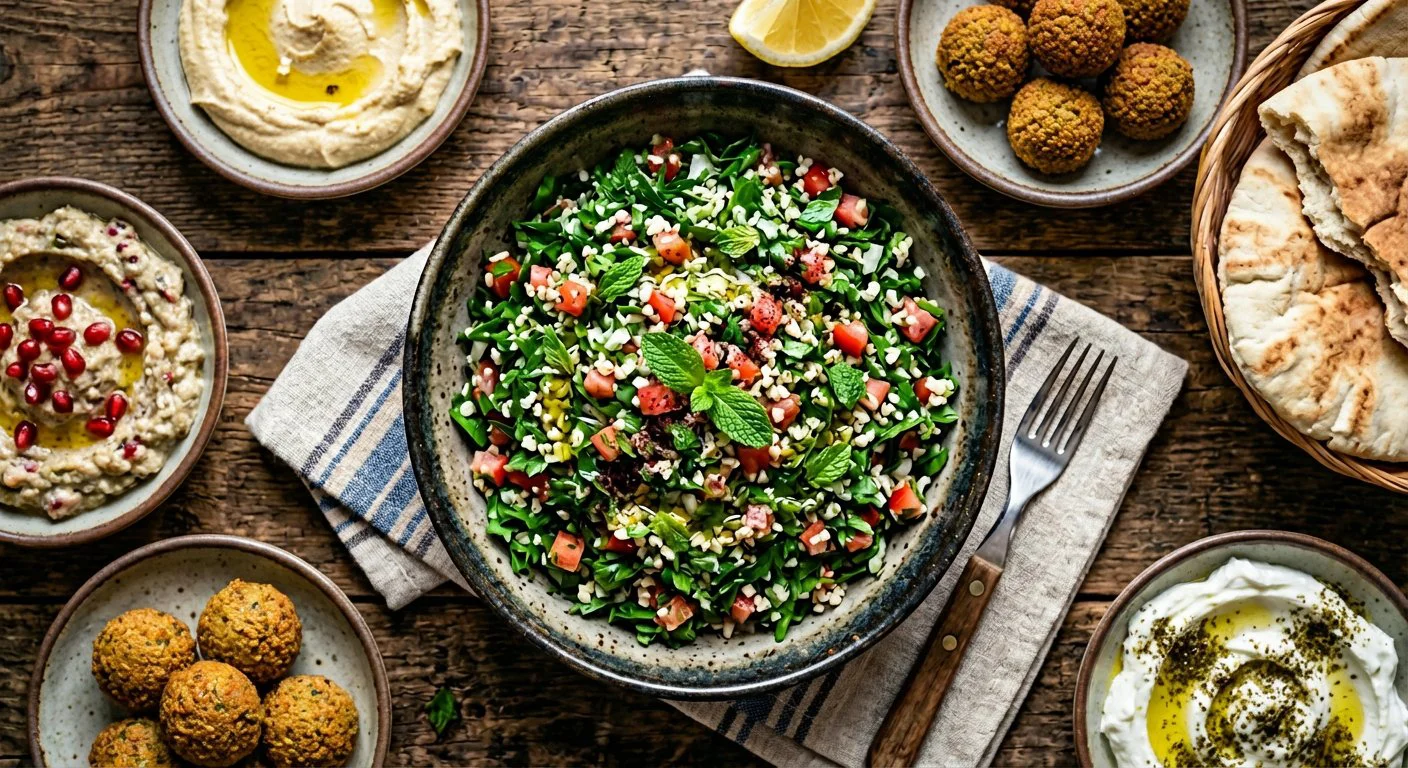
Tabbouleh rarely arrives alone. It is almost always part of a mezze — an elaborate spread of small dishes that appears at the center of the table, inviting everyone to share. The word mezze (مزة) comes from the Persian for “taste” or “snack,” and the tradition stretches across the Levant, Turkey, Greece, and beyond.
A proper mezze might include hummus drizzled with olive oil, smoky baba ghanouj, creamy labneh dusted with za’atar, fresh pita, crispy falafel, and — always — a generous bowl of tabbouleh. It is a philosophy as much as a meal: food is meant to be shared, slowly, with conversation, with people you love.
🌿 The secret to great tabbouleh is proportion: parsley is the star, not the bulgur. The bulgur should barely register — a subtle chew behind mountains of fresh herbs.
About Tabbouleh
- 🌾 Ancient origins: Believed to have originated in the mountains of Syria and Lebanon, with roots stretching back 4,000 years.
- 🏔️ Regional heart: Particularly associated with the Bekaa Valley of Lebanon, where it developed into the herb-forward salad known today.
- 🗺️ Spread far and wide: Variations appear in Armenia, Turkey, and across the diaspora — sometimes more bulgur, sometimes with pickled grape leaves.
- 🫒 Mezze staple: Tabbouleh is served alongside hummus, labneh, and baba ghanouj — the four pillars of any Levantine mezze spread.
The Story
When the Assyrians swept through what is now Lebanon in the ninth century BCE, they are said to have mixed fresh vegetables into a single communal dish and served it to dignitaries. Some scholars trace the very name — tabbouleh — to Aramaic, the language of the ancient Near East. Whether the dish began at a royal banquet or in the mountain villages of the Bekaa Valley, it has been evolving ever since.
For four millennia, the people of the Levant have been washing parsley, soaking bulgur, squeezing lemons, and tossing it together with good olive oil. The proportions have shifted — more bulgur in some eras, more herbs in others — but the spirit has never changed.
“The Lebanese version is almost entirely parsley. The bulgur is an afterthought — a whisper of grain behind a field of green.”
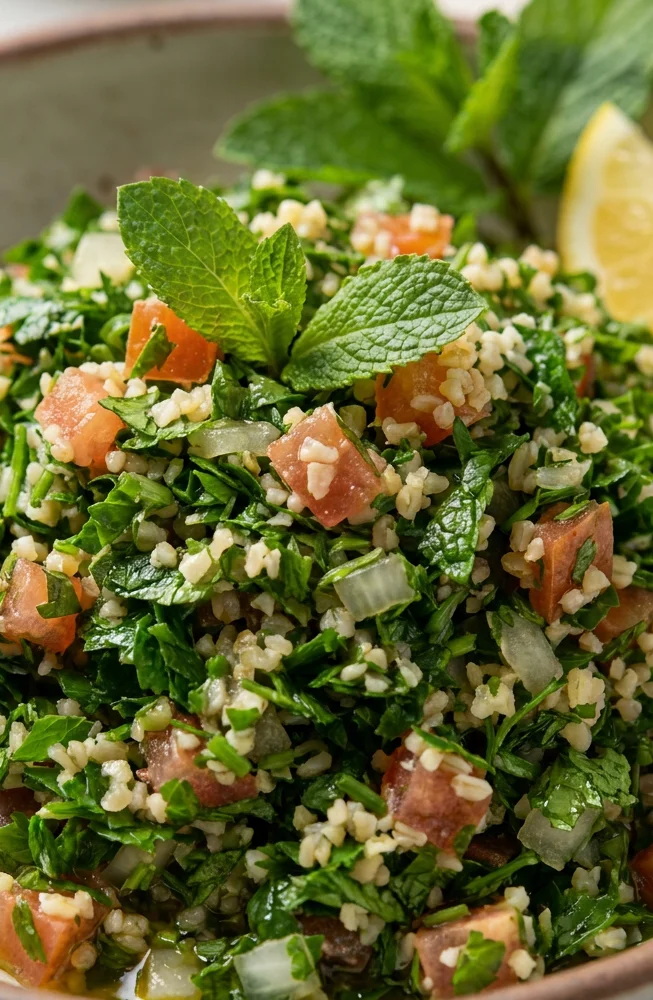
Today, tabbouleh has traveled the world and taken on countless local interpretations. In Armenia it may be heavier on grain; in Palestinian homes it often includes finely chopped pickled grape leaves for a briny depth. But return to Lebanon and you will find the classic: mountains of finely minced parsley and mint, barely dressed with bulgur, sharpened with lemon, finished with the best olive oil available.
Variations & Additions
Tabbouleh is one of the most forgiving and adaptable dishes in the Levantine repertoire. Here are a few beloved additions to try.
- Pomegranate seeds — Add a pop of sweetness and color. Particularly beautiful in autumn when pomegranates are in season.
- Freshly diced tomatoes — A common addition in Palestinian and Jordanian versions. Add just before serving to avoid sogginess.
- Green onions (scallions) — Finely sliced, they add a mild sharpness. Some cooks use them instead of, or alongside, the mint.
- Pickled grape leaves — The traditional Palestinian addition. They contribute a gentle brininess and an interesting chew.
- Less bulgur, more parsley — For the most authentic Lebanese version, reduce the bulgur to just 2–3 tablespoons per bunch of parsley. The result is intensely green and herb-forward.
How to Make It
Soak the Bulgur
Rinse the finely ground bulgur wheat thoroughly under cold water. Transfer to a bowl, cover generously with cold water, and leave to soak overnight — or for at least 8 hours. The bulgur will absorb the water and soften without any cooking. Drain well and squeeze out any excess moisture before using.
Prepare the Herbs
Wash the parsley and mint thoroughly and dry them completely — any remaining water will dilute the dressing. Strip the leaves from the thick parsley stems (thin stems are fine to include). Gather the parsley and mint into tight bundles and mince very finely with a sharp knife. The goal is a fine, even chop — not a rough chop, and not a paste. Take your time here; the texture of a great tabbouleh depends on it.
Combine & Dress
In a large bowl, combine the drained bulgur, minced parsley, and mint. If using any optional additions — diced tomatoes, finely chopped pickled grape leaves, or sliced green onions — add them now and toss gently to combine. Squeeze the lemon juice over the salad, drizzle generously with olive oil, and season with salt. Toss again and taste — adjust the lemon, oil, and salt until the balance feels bright, herby, and alive.
Rest & Serve
Allow the tabbouleh to rest for 10 to 15 minutes before serving. This brief resting time lets the bulgur absorb the dressing and allows the flavors to marry. Serve at room temperature as part of a mezze spread, with warm pita bread for scooping.