150 Years of Stone-Pressed Tahini
The first commercial tahini factory was established in Nablus, Palestine, in 1918 — a city already renowned for its Nabulsi soap, halva, and Turkish delight. But it is in Jerusalem where the oldest continuously operating tahini tradition survives today.
The Palestinian-owned Al-Jebrini Factory has been pressing sesame seeds in Jerusalem for over 150 years. What makes it singular in the world is its method: large, round basalt stones, turned slowly, crushing the sesame seeds in the same way they have been crushed for centuries. Every other commercial tahini producer on earth has moved on to industrial steel rollers. Al-Jebrini has not.
🪨 Basalt stone pressing generates less heat than steel rollers, preserving more of the sesame’s natural oils and producing a tahini with a deeper, more complex flavor — something you can taste in the finished dressing.
The Story
Tahini — sesame paste — is one of the oldest foods in the world. It has been mentioned in cookbooks since the tenth century, when the scholar al-Warraq documented it in Kitāb al-Ṭabīkh, the oldest surviving Arabic-language cookbook. Long before it became a global pantry staple, it was a cornerstone of Levantine cooking: a seed butter that could transform a simple dish into something rich, nutty, and deeply satisfying.
Made from nothing more than ground sesame seeds, tahini is as versatile as olive oil. It is a main ingredient in hummus and baba ghanouj, a binding agent in halva, a flavoring in biscuits and sweets, and — in its thinned, dressed form — a sauce that appears on almost every Palestinian and Lebanese table. Some even attribute medicinal qualities to it, pointing to its high content of calcium, iron, and healthy fats.
“While most associated with Middle Eastern cuisine, tahini travels far — east to China and Japan, north to Russia, west to Cyprus and Turkey. The sesame seed has always moved.”
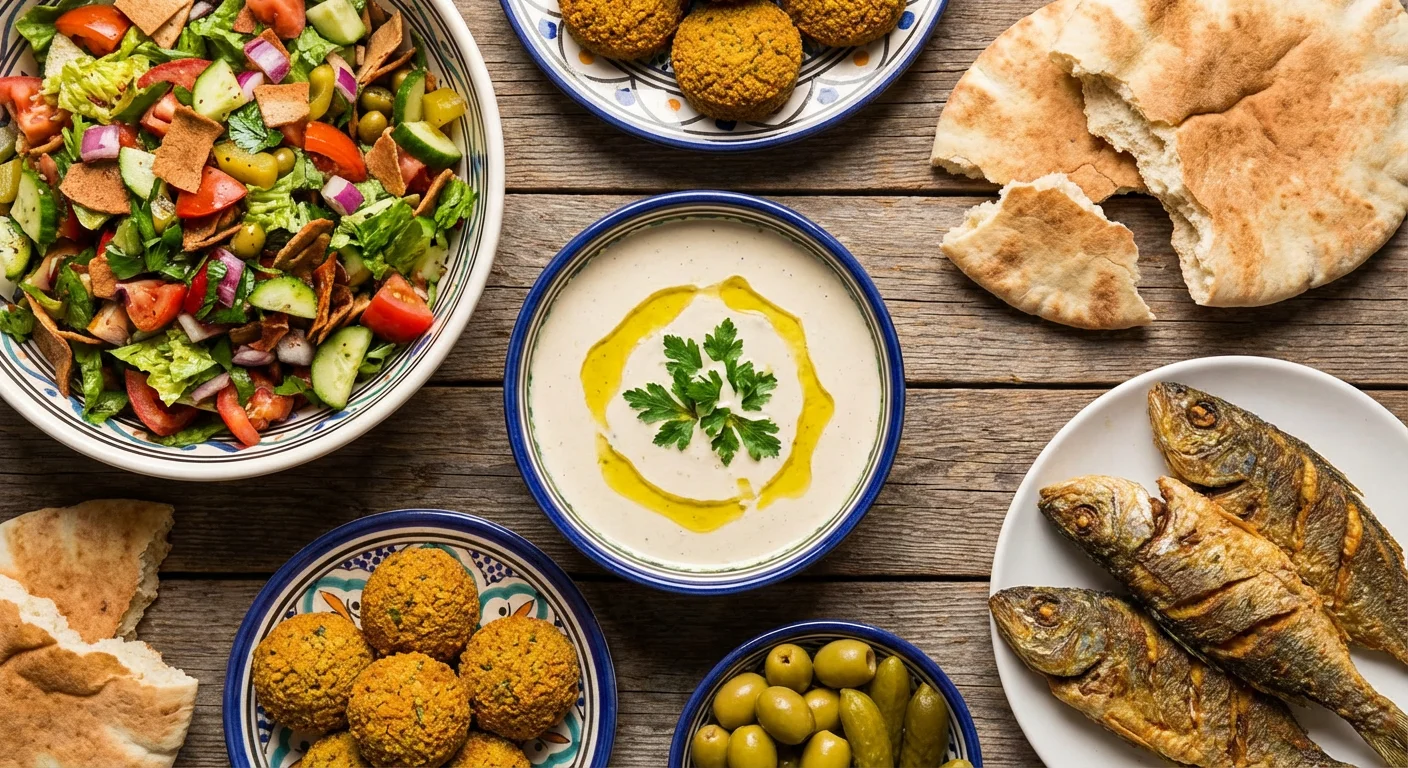
Tahini dressing is the everyday, weeknight version of tahini’s potential: whisked with ice water until it turns pale and creamy, sharpened with lemon juice, seasoned with salt. It takes ten minutes, uses four ingredients, and goes on everything. On falafel and fish. On salads and shawarma. Swirled into a bowl with olive oil as a dip for warm pita. Once you have a jar of it in the refrigerator, you will find uses for it every day.
For the best results, seek out raw tahini from a Mediterranean specialty grocer — larger jars, better prices, and a more pronounced sesame flavor than the small supermarket tins. The quality of the tahini is everything here.
Tahini Dressing Goes On Everything
A jar of tahini dressing in the refrigerator is one of the most useful things you can have in a Palestinian or Levantine kitchen.
- 🧆 Over falafel
- 🐟 Over fried or baked fish
- 🥙 In shawarma sandwiches
- 🥗 Drizzled over salads
- 🫓 As a dip for pita bread
- 🍆 Spooned over roasted vegetables
Variations
The base recipe is intentionally simple. Here are a few additions worth trying depending on how you’re using the dressing.
- Yogurt — Stir in a few tablespoons of plain yogurt for a creamier, tangier dressing with a lighter consistency. Works especially well as a dip or alongside fish.
- Garlic — Whisk in one small crushed clove for a sharper, more assertive sauce. Common in many Palestinian households.
- Cumin — A pinch of ground cumin adds warmth and depth, particularly good when serving alongside falafel or roasted vegetables.
- Fresh parsley — Blend a small handful of flat-leaf parsley into the dressing for a green tahini sauce — vivid in color and bright in flavor.
How to Make It
Combine Tahini and Water
Add the tahini to a large bowl. Gradually pour in the ice water while whisking briskly and continuously. The mixture will first seize and thicken — this is normal. Keep whisking and it will loosen, turning smooth, pale, and creamy. The cold water is important: it helps emulsify the tahini and gives the dressing its characteristic light color and texture.
Add Lemon and Salt
Once the tahini and water are fully combined into a smooth mixture, whisk in the lemon juice and salt. The lemon will brighten the flavor and loosen the texture slightly. Taste and adjust — the dressing should be tangy and well-seasoned, with a clean sesame flavor coming through.
Adjust Consistency & Serve
The dressing will thicken as it sits. If you need it thinner — for drizzling over salad or fish — whisk in a little more cold water a tablespoon at a time. For a thicker dip, leave it as is. Serve immediately or store in a sealed jar in the refrigerator for up to a week. Whisk briefly before using if it has separated.