The Onion Is Not a Garnish
The caramelized onion topping is not an afterthought — it is the reason mujaddara tastes the way it does. Slowly fried until deeply golden and almost jammy, the onions provide the sweetness, richness, and complexity that turn a pot of lentils and rice into something worth craving.
The crisped version — tossed in flour before frying — adds texture and a slightly nutty quality. This is the step people are most tempted to rush. Don’t. Give the onions the time they need, and the dish will reward you.
🧅 Plan for at least 20–25 minutes for the crisped onions. Stir frequently, watch the heat, and pull them just before they seem done — they will continue to color in the residual oil.
Two Onion Methods
- 🫒 Diced, sautéed in olive oil: Cooked until deep golden brown and stirred directly into the rice and lentils, adding flavor throughout.
- 🌾 Sliced, floured, and fried: Tossed in a light coating of flour before frying for a crisper, more textured finish. Piled on top just before serving.
- 🔥 Same pan, two rounds: Both onion preparations use the same pan in sequence — less cleanup, and the second batch picks up the flavor from the first.
About the Dish
Mujaddara, made with rice and lentils and topped with fried onions and parsley, is widely popular not only in Palestinian homes but throughout the Levant. In Syria, specifically among Christians, cooking mujaddara is considered an essential ritual of the celebration known as “Monk’s Monday,” the first day of Great Lent for the Greek Orthodox Christian community.
Mujaddara has never needed meat to justify itself. A dish of lentils, rice, and deeply caramelized onions, it has sat at Palestinian and Levantine tables for centuries — weeknight supper, Lenten staple, the thing you make when the pantry is nearly bare and it still somehow satisfies completely.
The thing you make when the pantry is nearly bare — and it still somehow satisfies completely.
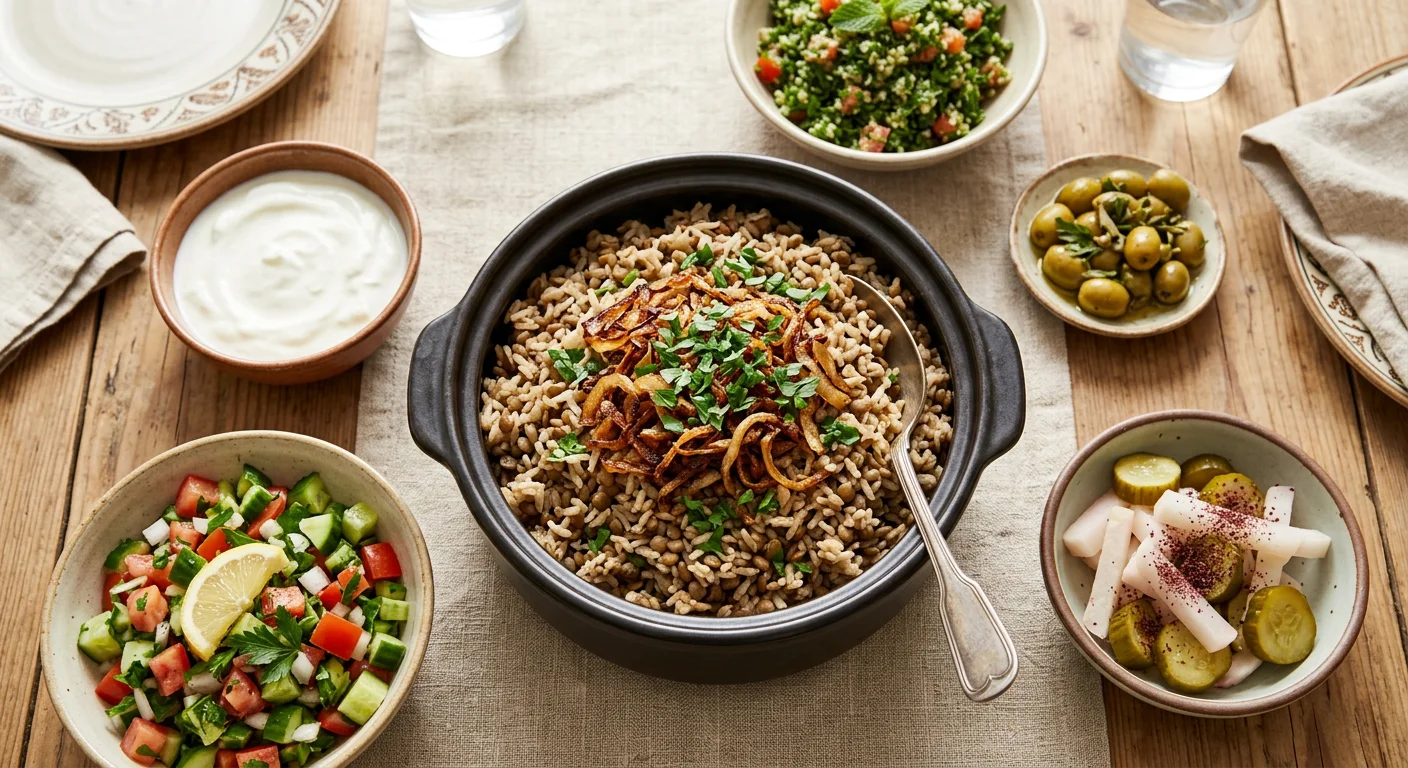
Mujaddara is traditionally served with plain yogurt and a fresh diced salad. The cool yogurt against the warm, onion-rich rice and lentils is not incidental — it is part of how the dish is meant to be eaten. The pickles in the photo are no accident either; a little acidity and crunch alongside is as natural as the parsley on top.
How to Make It
Prepare the lentils
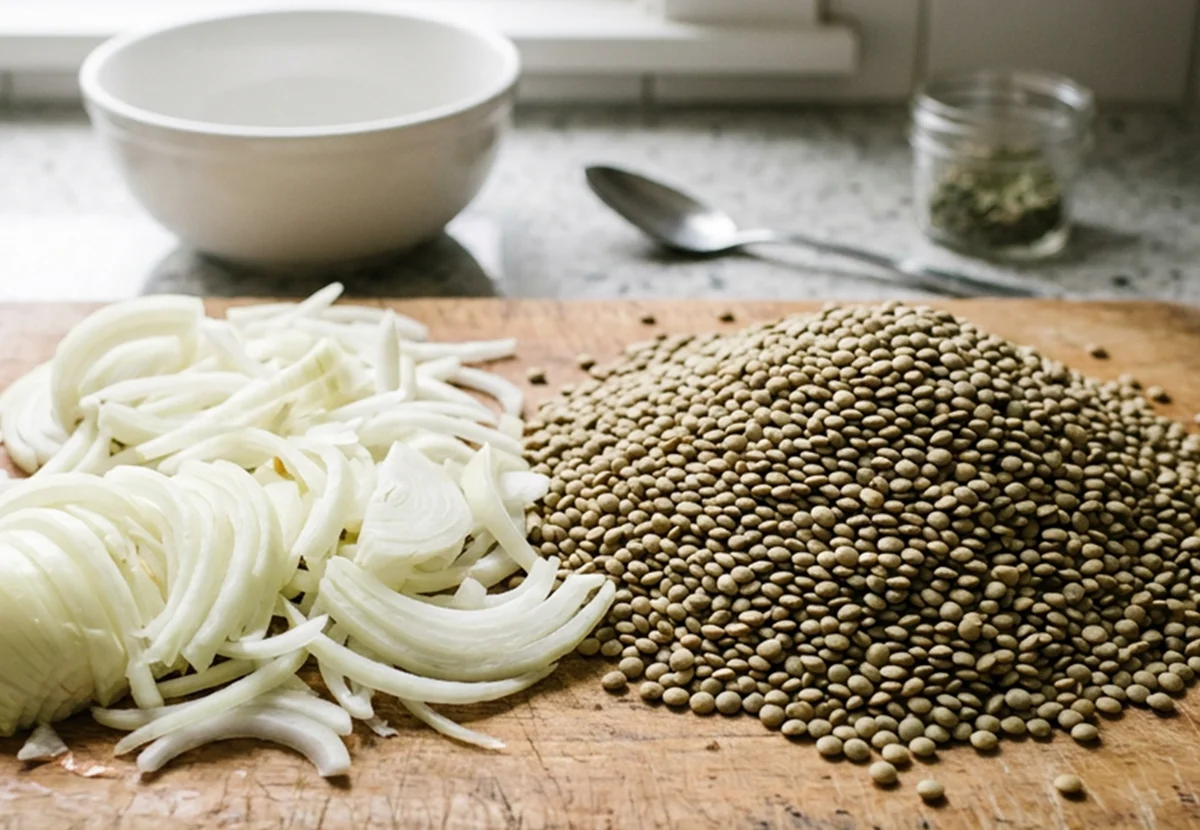
Before washing, pick through the lentils to remove any small stones or foreign debris. Rinse thoroughly and drain. Place in a pot, cover with water, and bring to a boil. Reduce to a low simmer and cook for 15 minutes — about 5 minutes less than the suggested time on the package. The lentils should still be somewhat firm at this point; they will finish cooking with the rice.
Add the rice and cook
Wash the rice and drain in a colander. Add the rice to the lentils along with 2 cups of water, the salt, cumin, and black pepper. Stir to combine — the water should cover the ingredients; add a little more if needed. Bring to a boil, then reduce to a low simmer and cover. Cook for 15–20 minutes until the rice is fully cooked and the water has been completely absorbed.
Sauté the diced onion
Pour the olive oil into a frying pan or wok over medium heat. Once hot, add the diced onion and sauté for about 15 minutes, stirring occasionally, until deep golden brown. Once the rice and lentils are fully cooked and the water absorbed, stir the diced onions along with the oil from the pan into the pot. Do not overmix — a gentle fold is enough.
Fry the crisped onions
Using the same pan, add 2 tablespoons of vegetable oil over medium heat. Toss the sliced onions in the flour until lightly coated, then add to the pan. Fry, stirring frequently, until deeply caramelized and crisped. This step is worth every minute — do not rush it and do not walk away. Pull them just before they look fully done; they continue coloring in the residual oil.
Plate and serve
Transfer the mujaddara to a large serving platter. Pile the crisped onions on top and finish with freshly chopped parsley. Serve hot alongside plain yogurt and a fresh diced salad. Pickles alongside are traditional and very welcome.