Why Yogurt Must Be Stabilized
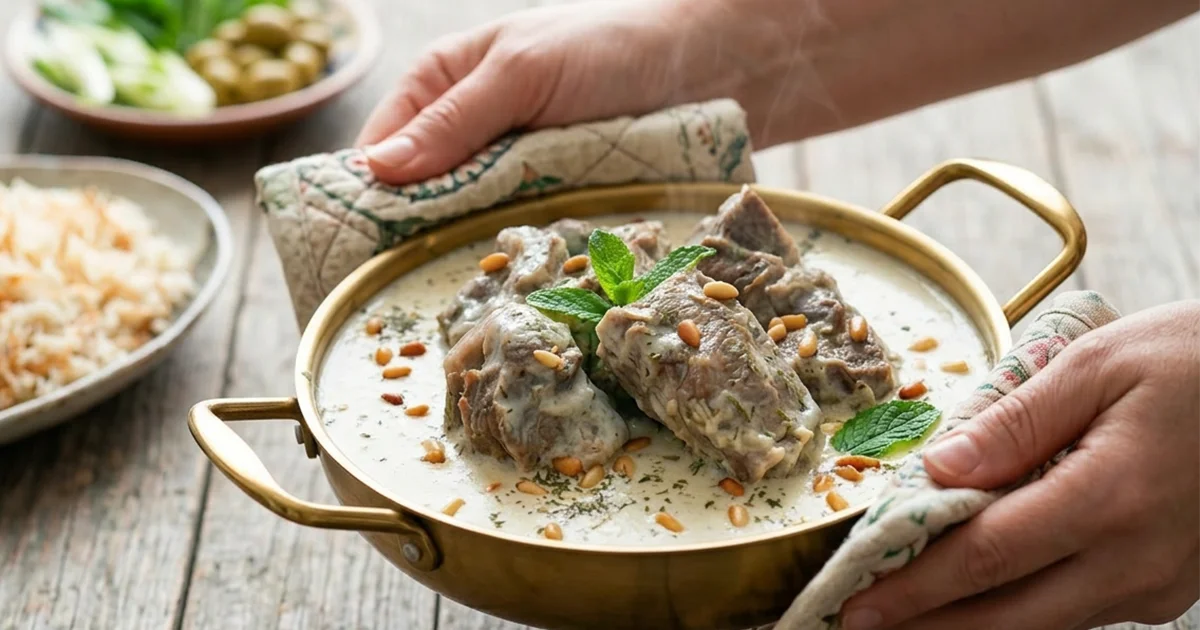
Cooking yogurt is a delicate operation. Left on its own, heat causes the proteins to seize and break, turning a smooth sauce into a grainy, curdled mess. The secret is cornstarch — it binds the proteins and keeps the sauce velvety even as it reaches a full simmer.
The other essential: constant whisking. From the moment the yogurt goes into the pot until the bubbles appear, you cannot stop. It is a small act of patience that makes all the difference.
💡 The whisk rule: If the yogurt does separate despite your efforts, an immersion blender will usually bring it back. But consistent whisking from the start means you won’t need it.
What makes this dish
- 🥛 Plain whole yogurt only. Greek yogurt is too thick and too concentrated — it breaks under heat far more easily. Use full-fat plain yogurt for the silkiest result.
- 🍖 Bone-in lamb. Bone-in shoulder or shanks give the broth far more depth than boneless cuts. That broth becomes the sauce — so it matters.
- 🧄 Golden garlic & dried mint. Sautéed together and added near the end, they cut through the richness of the yogurt with exactly the right lift.
- 🌿 Seven spice. Used in both the lamb and the sauce, this Levantine spice blend ties the dish together with warmth without overwhelming the yogurt’s tang.
The Story
There’s a beauty in the names of many Middle Eastern dishes. One dish carries two names: “Laban Ummo” and “Shakriyeh”. At its heart, it is a lamb-yogurt stew that belongs to the family of cooked yogurt dishes such as mansaf and shish barak.
“Laban Ummo” is descriptive. Arabic for “his mother’s milk”, it indirectly describes the origins of this dish, most likely during springtime when sheep are born, and milk is plentiful. It is literally lamb cooked in sheep’s milk.
It is literally lamb cooked in his mother’s milk — a dish rooted in season, in land, in the oldest rhythms of pastoral life.
Also known as “Shakriyeh” throughout the Levant, but primarily in Syria, the word comes from the Arabic “ashkur,” meaning “to thank”. Appropriately, it’s a common meal served on festive occasions in Lebanon, Palestine, and Syria by both Muslims and Christians. Regardless of its name, it warms the stomach and, shared with family and friends, exudes generosity, love, and thankfulness.
Bringing It to the Table
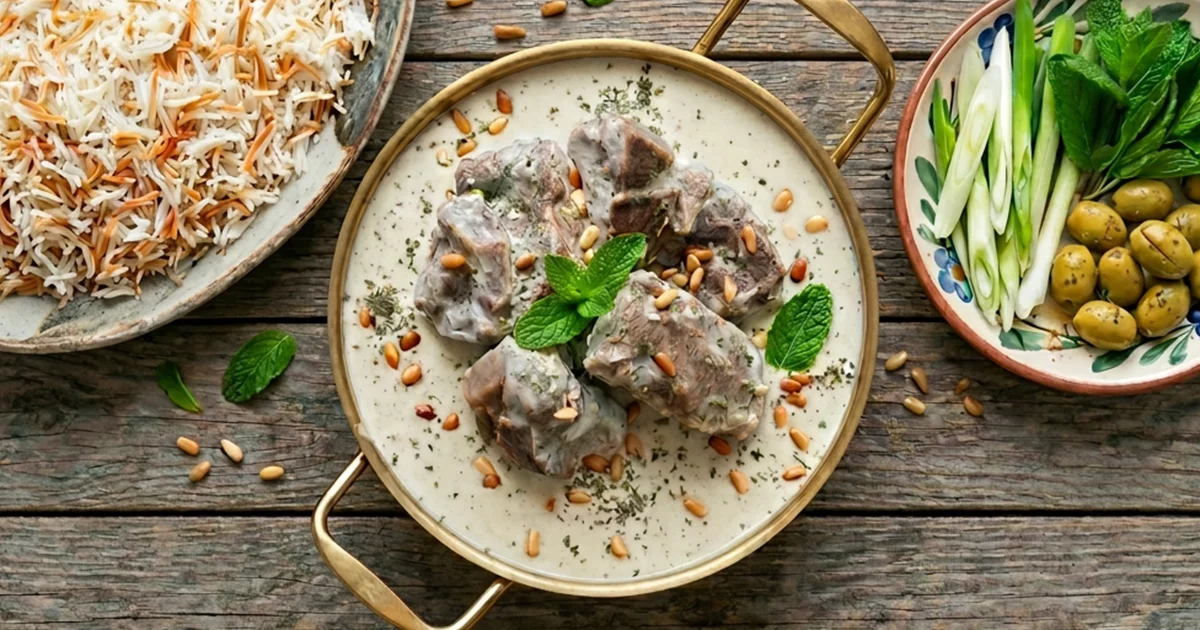
Shakriyeh is traditionally brought to the table in the brass pan it cooked in, placed at the center for everyone to serve themselves.
- On each plate, begin with a generous layer of vermicelli rice.
- Ladle the shakriyeh over the rice, making sure each portion gets a good piece of lamb.
- Scatter toasted pine nuts over the top.
- Finish with a couple of fresh mint leaves if desired.
- Serve alongside olives, spring onions, and fresh mint sprigs at the table.
How to Make It
Prepare and brown the lamb
Trim the lamb of any excess thick pieces of fat. Add it to a deep pot along with the quartered onions, bay leaves, cardamom pods, cinnamon sticks, cloves, black pepper, 7 spice, and salt. Over high heat, sauté the lamb on all sides for a few minutes — no added oil needed. Add 9 cups of water and bring to a boil. With a ladle, remove and discard any foam that forms on the surface. Boil for 20 minutes, then lower the heat to a simmer, cover, and cook for approximately 1 hour.
Rest the lamb, reserve the broth
Remove the lamb from the pot and set aside. Strain the broth through a fine sieve and set aside — you will need 4 cups of it for the yogurt sauce. The rest can be used for the rice.
Build and stabilize the yogurt sauce
In a cool pot (not yet on heat), combine the yogurt, cornstarch, salt, and 7 spice. Whisk until completely smooth. Place over medium-low heat and continue whisking continuously for 10–15 minutes until bubbles appear at the surface. Do not stop whisking — if the yogurt sits still over heat, it will separate. When bubbles appear, slowly add the reserved lamb broth while continuing to whisk. Add as much or as little as you like — bear in mind the sauce will thicken further as it sits.
Simmer the lamb in the yogurt
Once the broth is incorporated to your liking, add the lamb pieces to the yogurt sauce. Give it a good stir, cover, and allow to simmer on low heat for an additional 20 minutes.
Finish with garlic and mint
While the lamb simmers in the yogurt, mince the garlic and sauté it in the olive oil until golden brown. Add the sautéed garlic and dried mint directly to the pot. Stir and taste — add salt in small amounts as needed.
Make the vermicelli rice
Rinse the rice until the water runs clear, then soak in warm water for 10–20 minutes. In a deep pot, heat the olive oil or ghee over medium heat. Add the vermicelli and stir continuously until it turns golden-brown — watch it closely as it can burn quickly. Drain the rice thoroughly and add it to the pot with the vermicelli. Stir for a couple of minutes until all the grains are coated in oil. Pour in 4 cups of boiling water, add salt, bring to a boil, then reduce to low, cover tightly, and simmer for 15 minutes. Remove from heat and rest, lid on, for 10 minutes before serving.